Source FDA Certified Reusable Shaker Bottle with Cover for Gym, School, and Sports
Source FDA Certified Reusable Shaker Bottle with Cover from 30 verified suppliers offering plastic, glass, and stainless steel options. Compare capacities from 1500ml to 740ml, customizable logos, and certifications like LFGB and CE for outdoor, sports, and school use.
Key considerations
Products List


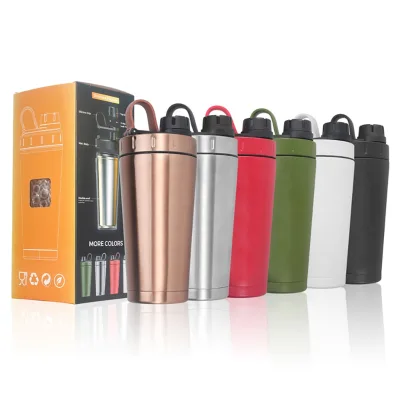


Mikenda Custom Shaker Bottles Water Bottles Wholesale Good Quality Shaker Water Bottle
$2.80 - $4.20
MOQ: 100 Pieces

Wholesale Custom Logo Shaker Bottle BPA Free1l Sport Motivational Plastic Cup Shaker Bottle
$2.80 - $4.20
MOQ: 100 Pieces
Comprehensive Sourcing Guide
Strategic Sourcing Guide for FDA Certified Reusable Shaker Bottles with Covers
Understanding the Product Category and Material Diversity
When sourcing a reusable shaker bottle with a cover that meets FDA certification standards, buyers must first navigate the diverse material landscape available in the global market. The core keyword implies a vessel designed for mixing protein powders, supplements, or beverages, requiring durability and specific safety standards. Based on the available product data, the market presents distinct material categories, primarily Plastic, Glass, and Stainless Steel. Each material offers unique advantages regarding weight, breakage resistance, and thermal retention, which directly influences the final procurement decision.
Plastic remains a dominant category in this segment, with specific references to Tritan and Food-Grade Silicone & PP combinations. Tritan is frequently highlighted for its clarity and resistance to odors, making it a preferred choice for shaker bottles where visual inspection of the mixture is desired. The data indicates that specific plastic models, such as D2311 and D2314, utilize these materials and are explicitly marketed as 100% BPA-Free. This attribute is critical for health-conscious consumers and is often a prerequisite for FDA compliance in food-contact applications. Conversely, glass options, specifically Borosilicate Glass, are also present in the catalog. These are characterized by high thermal shock resistance and chemical inertness, though they typically require a protective cover or case to prevent breakage during transport. Stainless Steel models, such as the KL series, offer superior insulation and durability, though they may lack the transparency required for some mixing applications.
The physical dimensions and capacity vary significantly across these materials. Plastic models range from 1500ml to 2200ml, catering to high-volume users, while glass and stainless steel options often focus on standard capacities like 400ml, 500ml, and 600ml. The single net weight of these products also varies, with plastic units ranging from approximately 105g to 215g, and stainless steel units presenting different weight profiles based on wall thickness and insulation layers. Buyers must align these physical specifications with their target demographic's usage habits, whether for gym sessions, outdoor sports, or daily school use.
Technical Specifications and Functional Attributes
The technical performance of a shaker bottle is defined by its capacity, structural design, and functional features. The product data reveals a wide range of standard capacities, including 150ml, 280ml, 350ml, 400ml, 550ml, 600ml, 650ml, 700ml, 740ml, and up to 2200ml. This variance suggests that suppliers offer solutions for different use cases, from compact travel sizes to large-volume gym containers. The "Square Water Bottle" and "Clear Water Bottle" designations indicate that shape and transparency are key differentiators. Square designs often maximize shelf space and may offer a more ergonomic grip, while clear bottles allow users to monitor mixing consistency.
A critical functional attribute for shaker bottles is the inclusion of a mixing mechanism or a specific cover design. While the provided data explicitly mentions "with Handle" for glass models and "Cover" as a general requirement for the keyword, the specific internal mixing technology (such as wire whisks or ball bearings) is not detailed in the raw facts. However, the presence of "Customizable" logos and "Available" customization options suggests that suppliers are willing to adapt the cover design or bottle geometry to meet specific branding or functional needs. The packing specifications, ranging from Color Box to White Box or OPP Bag, also reflect the intended market tier, with boxed packaging often associated with premium retail presentation.
The application scenarios listed—Outdoor, Sports, Gym, School, Camping, and Travel—highlight the versatility required of these products. A bottle suitable for a gym environment must withstand drops and frequent washing, whereas a camping bottle might require better insulation or a more secure locking mechanism. The data shows that models like D2306 and D2400 are specifically tagged for these multi-scenario uses, implying a robust design capable of handling diverse environments. Buyers should verify that the specific model selected includes a secure lid mechanism that prevents leakage during vigorous shaking or transport, as this is a primary failure point in shaker bottle procurement.
Compliance Verification and Certification Standards
Ensuring that a reusable shaker bottle is genuinely FDA certified requires a rigorous verification process, as the term "FDA certified" is often used loosely in marketing. The supplied facts list specific certifications including FDA, CE / EU, CIQ, LFGB, and EEC. These represent a robust compliance framework, but buyers must understand the distinction between the product meeting the standard versus the supplier holding a blanket certification. For instance, the data explicitly links FDA, CE / EU, and LFGB to plastic models like D8645 and D2311, while stainless steel models like KL-7091B list CIQ and LFGB. The presence of EEC certification on glass models further underscores the regulatory complexity of the European market.
Buyers must demand specific test reports or certificates of compliance that correspond to the exact model number they intend to purchase. The data indicates that some products adhere to LFGB/SGS standards, which are particularly relevant for food safety in European markets. It is essential to verify that the certification covers the specific materials used, such as Tritan or Food-Grade Silicone & PP, rather than just the final assembly. The "100% BPA-Free" attribute is a direct claim that should be backed by material safety data sheets (MSDS) or third-party lab results. Without these documents, the claim remains an observation rather than a verified fact.
Furthermore, the presence of CE / EU certification implies compliance with European safety directives, which often run parallel to or exceed FDA requirements. However, the data also lists "Low-confidence background" regarding CE, suggesting that while it is a common certification, its specific application to every listed product may vary. Buyers should not assume that a product listed with FDA certification automatically meets all local regulatory requirements for their target market. Instead, they must request documentation that proves the specific batch or model has been tested against the relevant standards for the destination country.
Cost Drivers and Economic Considerations
The pricing and economic structure of sourcing shaker bottles are influenced by material costs, customization levels, and order volume. The observed price range in the market data spans from $0.40 to $6.91 USD. This wide disparity is primarily driven by the material composition and the complexity of the manufacturing process. Plastic models, particularly those made from Tritan, tend to occupy the lower to mid-range of this spectrum, while stainless steel and specialized glass models with handles and advanced insulation likely command higher prices. The single net weight of the product also correlates with cost; heavier items generally require more raw material and incur higher shipping costs.
Minimum Order Quantity (MOQ) is another significant cost driver, with observed ranges between 48 and 3000 units. Lower MOQs, such as 48 units, are ideal for startups or buyers testing the market, but they often come with a higher unit cost due to the setup fees associated with smaller production runs. Conversely, orders approaching 3000 units benefit from economies of scale, potentially reducing the per-unit price significantly. The customization options, including logo printing and color box packaging, add to the overall cost. Suppliers offering "Available" customization and "Customizable" logos will typically charge a setup fee and a higher unit price compared to standard, unbranded items.
Buyers must also consider the packaging costs. The data shows options for Color Box, White Box, or OPP Bag. Color boxes are more expensive to produce and ship due to their size and weight but offer better retail presentation. OPP bags are cost-effective but provide less protection. The choice of packaging directly impacts the landed cost and the perceived value of the product. Additionally, the origin of the product, listed as China or specifically Zhejiang, China, influences logistics costs. While the region is a major manufacturing hub, buyers should factor in freight rates and potential tariffs when calculating the total cost of ownership.
Supplier Evaluation and Operational Capabilities
Evaluating a supplier for shaker bottle production requires looking beyond the product specifications to their operational history and capabilities. The data mentions a "16 years factory" advantage for certain models, indicating a supplier with significant experience in the industry. Longevity in manufacturing often correlates with consistent quality control and the ability to handle complex customization requests. Buyers should verify this experience by requesting references or case studies from previous clients, particularly those in the sports or fitness sector.
The ability to customize is a key differentiator among suppliers. The fact that "Customization" and "Logo" are listed as available attributes suggests that the suppliers are flexible. However, buyers should assess the supplier's capacity for rapid prototyping and their lead times for custom orders. The data does not provide specific lead times, so buyers must explicitly ask for production schedules for both standard and customized items. The origin location, specifically Zhejiang, China, is a known hub for plastic and glass manufacturing, which can facilitate efficient supply chains. However, buyers should also evaluate the supplier's logistics network to ensure they can handle international shipping and customs clearance efficiently.
Quality control processes are another critical factor. Suppliers with a long history, such as the 16-year facility mentioned, likely have established QC protocols. Buyers should inquire about their in-house testing procedures, particularly for BPA-free claims and leak testing. The presence of multiple certifications (FDA, CE, LFGB) suggests that the supplier is familiar with international standards, but buyers must confirm that these certifications are current and applicable to the specific production line. It is also important to verify the supplier's capacity to scale production, especially if the order volume is expected to grow rapidly.
Quality Control Protocols and Long-Term Procurement
Implementing a robust quality control (QC) strategy is essential for maintaining product integrity in the shaker bottle market. Given the direct contact with food and beverages, any failure in material safety or structural integrity can lead to significant brand damage. Buyers should establish a clear QC plan that includes pre-production sample approval, in-process inspections, and final random sampling. The specific attributes like "100% BPA-Free" and "Clear Water Bottle" require visual and chemical verification. For plastic bottles, checking for clarity and absence of discoloration is vital, while for glass bottles, inspecting for cracks or imperfections is necessary.
Long-term procurement considerations involve building a sustainable relationship with the supplier. This includes negotiating favorable terms for repeat orders, securing consistent pricing, and ensuring supply chain resilience. The data indicates that some models have specific standard capacities (e.g., 400ml, 550ml, 700ml), which buyers should standardize to simplify inventory management. Additionally, the availability of different packing options (Color Box, White Box, OPP Bag) allows buyers to adapt their packaging strategy based on market feedback without changing the core product.
Buyers should also plan for potential product iterations. As consumer preferences shift, the demand for new features or materials may arise. A supplier with a "16 years factory" background is likely better equipped to innovate and adapt to these changes. Finally, maintaining open communication regarding certification renewals and regulatory updates is crucial. The market for food-contact products is subject to changing regulations, and a proactive supplier will keep buyers informed of any necessary adjustments to ensure continued compliance. By focusing on these long-term factors, buyers can secure a reliable supply of high-quality, FDA-certified shaker bottles that meet their evolving business needs.
FAQs
What certifications do these shaker bottles hold?
The products hold FDA, CE / EU, CIQ, LFGB, and EEC certifications depending on the model. Plastic models like D8645 and D2311 explicitly list FDA and LFGB, while stainless steel models may carry CIQ and LFGB. Buyers must verify that the specific model matches the required standard for their target market.
Which materials are used for FDA certified shaker bottles?
Available materials include Plastic, Glass, and Stainless Steel. Specific plastic types mentioned are Tritan and Food-Grade Silicone & PP, which are often BPA-Free. Glass options use Borosilicate Glass, while stainless steel models offer durability without transparency.
Can I customize the logo and packaging for these bottles?
Yes, customization is available for logos and packaging options like Color Box or White Box. Suppliers also offer OPP Bag packing for standard items. Buyers should confirm if custom logo printing incurs additional setup fees or affects the minimum order quantity.
What capacity sizes are available for these reusable bottles?
Standard capacities range from 280ml up to 2200ml. Specific models include sizes like 350ml, 400ml, 550ml, 600ml, 650ml, 700ml, and 740ml. The large capacity options reach 1500ml and 2200ml for high-volume users in sports or gym settings.
How does the price vary for different bottle types?
The observed price range spans from 0.40 to 6.91 USD per unit. Pricing depends on material, such as Tritan plastic versus stainless steel, and customization levels. Higher MOQs generally reduce the unit cost, while custom packaging adds to the overall price.
What are the minimum order quantities for these products?
The minimum order quantity ranges from 48 to 3000 units. Lower MOQs like 48 units are suitable for testing the market, while larger orders benefit from economies of scale. Buyers should check if custom logos require a higher minimum order than standard items.
Where are these shaker bottles manufactured?
The products originate from China, with specific mentions of Zhejiang as a manufacturing hub. Some listings specify the origin as China generally, while others pinpoint Zhejiang. This location influences logistics costs and lead times for international buyers.